Saturday, September 28, 2019
Pangasinan Trip 2019
Before 6:00 AM, I was already at Dagupan City. I was able to take a picture of its church at daybreak. Recently, I’ve been taking pictures of the town’s Poblacion (city center) including the main church, the municipal or city hall, the public market, the public park, Rizal’s monument, ancestral houses and Jollibee stores.
From Dagupan, I took a jeep to the nearby town of Mangaldan. Same routine – walk about the Poblacion, take a picture of the main church, plaza, municipal hall, Rizal’s monument, Jollibee store and some ancestral houses. Then I’m off to the next town of Manaoag, Pangasinan.
From Manaoag, I travelled to Pozzorubio, Pangasinan. It was already afternoon when I decided to go to Pozzorubio and there were no longer jeeps plying to the town. Luckily there’s a tricycle terminal. In Pozzorubio, I did exactly the same thing – go to the town proper (Poblacion), visit the main church, some ancestral houses, municipal hall, Rizal’s monument and public park. I had difficulty finding the Pozzorubio Public Market.
Travelling from town to town is pretty simple especially if the town/province is from Spanish-era period. The design is simple – the church is usually the center of the town. In front of it is usually the Plaza and just a few meters would be the Munisipyo (Municipal Hall) and the Palengke (Public Market). Ancestral houses are usually located around the church. The closer your house is to the chuch, the more prominent your family is. A monument to Rizal is almost, always, present in the Plaza.
From Pozzorubio, I took another jeep to Urdaneta but I stopped by at the crossroads to Laoac and Binalonan. I took a jeep and went to Laoac, which is a a very quiet and small town. The church is simple and the municipal hall is being renovated. I also can’t find the public market of Laoac but there’s a plaza. From Laoac, I rode the Manaoag-Binalonan jeepney.
There’s a Jollibee and McDonalds by the way at the crossroads. The town of Binalonan is also quiet. I was surprised that they have GrabTrike colored green. It’s probably a collaboration of the town to the riding company and it’s applaudable. Binalonan has wide streets around the town hall (municipal hall). There are some ancestral houses near the church and it’s lovely to walk around the Poblacion.
Around 5:00 PM I’m back at the crossroads and rode another jeep towards the City of Urdaneta, Pangasinan. I’m surprised that the church of Urdaneta is not as grand (or big) as in other cities. It’s like Cabanatuan or any other big city in the province. I decided to sleep over in this city but I had difficulty finding accommodation via the Agoda app. Eventually I asked a tricycle driver to take me to the nearest, least expensive inn.
I have visited 7 towns today.
Day 2
I left Urdaneta City early in the morning. I took a bus to Dagupan City and from there, I took another bus to Alaminos City. I had breakfast in one of the town’s ancestral houses repurpose into a cafeteria (the 1st fllor). I was surprised at the sheer number of ancestral houses in this city especially along the street going to the Hundred Islands Park. It was rainy when I reached this town so there were no boats going to the Hundred Islands.
Alaminos City both has Jollibee and McDonalds. I can’t find Rizal’s monument but instead, there’s a monument for Andres Bonifacio in front of the church. From Alaminos City, I took a grueling 2 hour jeepney ride to the northern-most town of Bolinao.
Bolinao is a bit chaotic since the public market extend to the area in front of the municipal hall. Rizal is depicted along with other National Heroes. The church of Bolinao is awesome with its painting on the ceiling. Almost all popular stories of the Bible and about the life of the Virgin Mary is depicted in the ceiling. It was one of the most beautiful churches I’ve seen visited.
Of all the towns I’ve visited in Pangasinan, only Bolinao has a group of vendors selling the town’s unique product – bamboo (rice) cake. It’s like our local suman but instead of being wrapped in banana leaves, it’s cooked in bamboos. It comes with a very sweet syrup similar to that found in Baguio. I commend the local government of Bolinao for marketing a unique product of the town. I hope all other towns will follow their example.
From Bolinao, I took the Bolinao Express bus and went to the capital of Pangasinan province – Lingayen. I was able to take some photos of the towns along the way – Bani, Sual and Labrador. Lingayen is a huge city. Rizal’s monument here is remarkable. There’s Jollibee as well. From the church of Lingayen, I took a tricyle to the Provincial Capitol grounds. The complex is huge and has a lot of trees. It gives the feel of being in Baguio.
From Lingayen, I took a jeep to the quiet town of Binmaley. It’s another small and quiet town. I love the feel of Binmaley. The church is unique because it is surrounded by statues of the Virgin Mary with some of her famous titles. Too bad both the church of Binmaley and the Museum of Binmaley were closed during my visit (Saturday morning). From the statue of a fisherman at the town plaza and from the wide ricefields in town, I can say Binmaley is a farming and fishing town.
My next stop was the city of San Carlos. There’s no direct jeepney route to San Carlos City. I rode the jeep to Dagupan but took off at a tricycle station for San Carlos. I had my lunch here. The city is huge as well. There’s a Rizal Park near the church. The City Hall is right across the street. The public market is not in the vicinity. There’s a Jollibee San Carlos and this city is where publick transportation are located. From San Carlos City you could visit other towns to the West side of Pangasinan. I decided to go to Malasiqui.
Malasiqui is another quiet town. The town hall, church, Rizal Park, and public market are all adjacent to each other. There are a lot of buses coming from Dagupan en route to Manila. I left Malasiqui around 4:00 PM. By 10:00 PM I was back in Manila.
I visited 6 towns today for a total of 13 towns in 2 days. I would post more pictures of the towns I've mentioned here. I would also love to visit the province of Quezon next.
Sunday, January 6, 2019
Saints Peter and Paul Parish Chuch, Poblacion, Makati City
Poblacion, Makati is a very interesting Barangay. It currently has a lot of restaurants for Korean nationals but at the heart of this barangay is the old Sts Peter and Paul Church.
Two markers can be found on the façade of the church which tells the story of this church:
Historical Research and Markers Committee
San Pedro Macati
The Franciscans were the first missionaries here in 1578. The Jesuits built this church in 1620 and administered it until 1768. Adjoining were the Novitiate for the Jesuits and a house of retreat. Both the church and Novitiate were dedicated to San Pedro in memory of the Rev. Pedro de los Montes, builder of the church and of Captain Pedro de Britto, Regidor of Manila, who donaed the site called Buenavista in 1607 and endowed the Novitiate.
1937
The other marker reads:
Cultural and Heritage Center of Makati
Barangay Poblacion
Sts. Peter and Paul Church
In July 1, 1608, the Spanish Alferez General Capitan Pedro de Brito and his wife, Dona Ana de Herrera donated half of their land to the Jesuits on the condition that a church and novitiate be built on a hill called Buenavista which would be under the patronage of San Pedro. Fr Pedro Montes took charge of the construction until its completion in 1620. Its design is of Baroque architecture and followed the typical style of colonial mission churches.
Because he was the partron of the locality, the place was named San Pedro Macati which was fondly corrupted by the locals to “Sampira”, which referred to both the town and the church. It is the mother Parish Church of Makati and played a central role especially during its years of initial development.
The church was destroyed during the British occupation in 1762 and was reconstructed much later in 1849 using adobe from Guadalupe and Meycauayan, yakal, molave, baticulin and guijo timbers and conchas or sea shells for its windows.
It underwent numerous renovations and design changes over the years but most of its original features can still be found such as the retablo and its bells.
It is home to the images of Nuestra Senora de la Rosa and the Sto Nino de Pasion which can only be found in Makati.
Done of the 14th day of August 2009 during the administration of Punong Barangay Jose C. Villena IV and the Poblacion Barangay Council through the Education and Culture Committee under the Makati Poblacion Heritage Conservation Project of Mayor Jejomar C. Binay
San Lorenzo Ruiz Parish Chuch, Taytay, Rizal
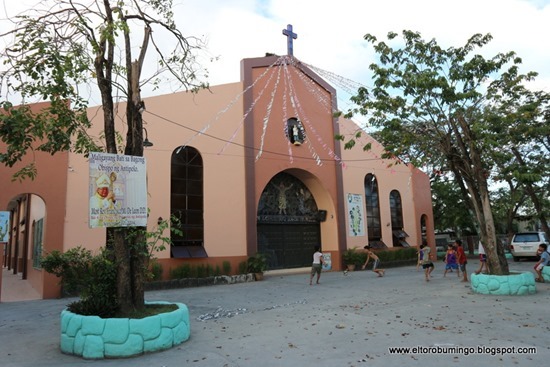
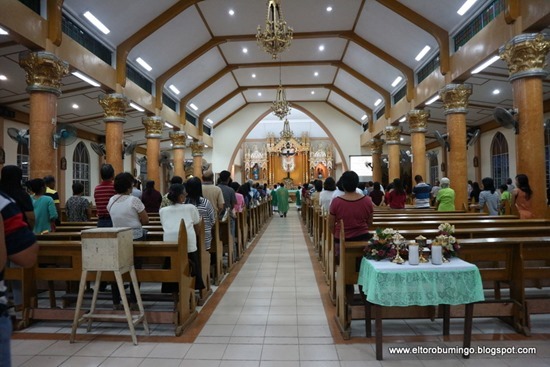
The neighbor of Brgy Pinagbuhatan, Pasig City to the east is Brgy San Lorenzo Ruiz, Taytay, Rizal. If you’re Catholic and living in Nagpayong area or Kenneth Road, you’ll probably attending mass at the San Lorenzo Ruiz Parish Church in Taytay, Rizal rather than the one in Pinagbuhatan Kaliwa (San Sebastian Parish Church).
San Lorenzo Ruiz Parish Church is bigger than San Sebastian. I’ve attended a couple of masses at this Catholic Church but I also have no idea on when this was founded. What I know so far is that, this is originally located a few blocks away from the current location. If you’re coming from Kenneth Road or Sandoval Avenue going to the San Lorenzo Ruiz Parish Church, you’ll come across the old location.
Here are some of the pictures I took of this church in 2016.
St. William’s Church, San Marcelino, Zambales
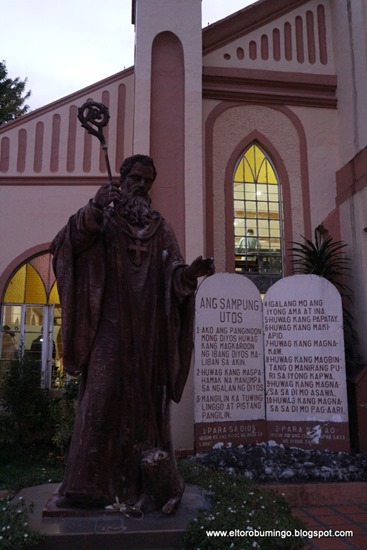
San Marcelino, Zambales is home to the Roman Catholic Church of St. William. Too bad I can’t find some information about St. William’s Church – its founding date and the specific saint whom this church is dedicated to. There are a lot of St. William in the Roman Catholic roster of saints.
Anyway, I still find St. William’s Church in San Marcelino, Zambales a nice church to visit. Hopefully this year, we can go back to it and attend the town’s Singkamas or Mango Festival.
Sunday, September 30, 2018
San Felipe Neri Parish Church, Mandaluyong City
There is an old church along Boni Avenue in Madaluyong City. It’s the Parish of San Felipe Neri (Saint Philip Neri). I visited it a few months ago and it’s only now that I’m uploading the pictures. Unfortunately, the church was closed when I visited it that’s why I don’t have interiror shots of the church. I guess I was in Kalentong, Mandaluyong when I decided to visit this church. I can’t remember what route of jeepney I rode to go here.
Accoridng to Wikipedia, St. Philip Romolo Neri (Italian: Filippo Romolo Neri; 21 July 1515 – 25 May 1595), known as the Third Apostle of Rome, after Saints Peter and Paul, was an Italian priest noted for founding a society of secular clergy called the Congregation of the Oratory. Philip Neri is one of the influential figures of the Counter-Reformation, and noted for converting to personal holiness many of the influential people within the Church itself.
On the façade of the church, there is a marker that reads:
Sa ngalan ng Panginoon, paggunita sa ika-100 taon Centenario ng pagkakatatag ng Parokya San Felipe Neri. Unang Kura Paroko 1863 – Rev. P. Francisco Gimenez. Kasalukuyang Kura Paroko 1963 Rev. P. Pantaleon L. de Guzman. Ang ala-alang ito ay buong pusong inihahandog ng bayang Mandaluyong, Rizal sa kanyang kabunyian, Rufino J. Card. Santos Arsobispo ng Maynila, Ika-2 ng Disyembre, 1963. Luwalhati sa Diyos at sa Kapurihan ng Birheng Maria Ina ng Diyos
My rough translation:
In the name of the Lord, commemorating the 100th year Centennial of the foundation of St. Philip Neri Parish Church. First Parish Priest 1863 – Rev. Father Francisco Gimenez. Present Parish Priest 1963 Rev. Father Pantaleon L. de Guzman. This memory (or marker) is whole-heartedly dedicated by the town of Mandaluyong, Rizal Province in his Eminence Rufino J. Card. Santos, Archbishop of Manila, December 2, 1963. Glory to God and to the honor of the Virgin Mary, Mother of God.
There’s another marker that reads:
On this 1st day of December 2013 on the 1st year of the Pontificate of Pope Francis with his Eminence Luis Antonio G. Cardinal Tagle, D.D. as the 32nd Archbishop of Manila with Rev. Msgr. Mario D. Enriquez as Pastor, this Church and its altar were dedicated to the Triune God, the Father, the Son and the Holy Spirit. Amen
This marker bears testament to the historic occasion of the 150th year of establishment of San Felipe Neri Parish and symbolizes our gratitude to God and to God’s People for their generosity.
These are shots from Kalentong, Shaw Boulevard, Mandaluyong City
Tuesday, September 18, 2018
Update: Sta. Clara de Montefalco Parish Church, Pasig City
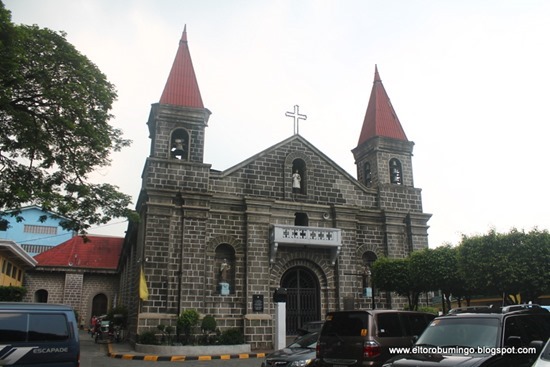
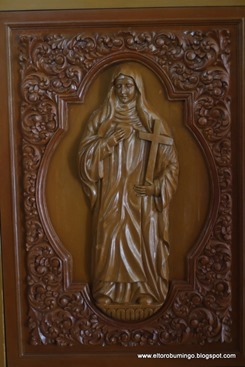
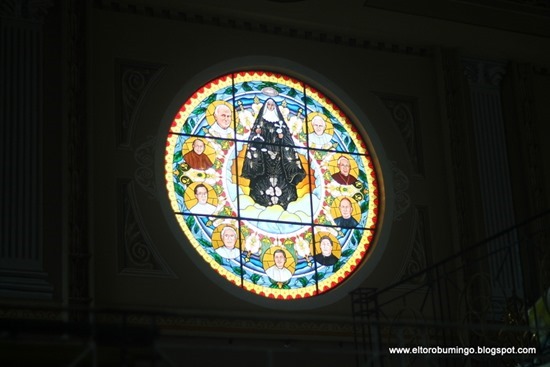
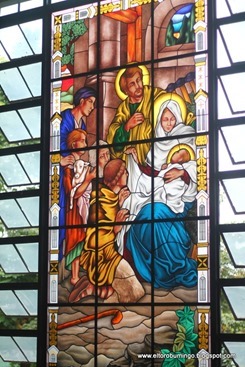
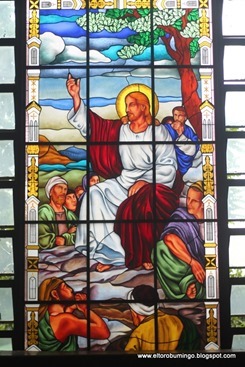
I first time I took pictures of the Sta. Clara de Montefalco Parish Church in C. Raymundo Avenue, Pasig City back in April 2013. Back then, there are still no stained glass on its window frames, just G.I. sheets. Inside, tarpaulin prints of the pictures to be depicted are hang instead. Recently when I re-visited this church, the stained glass windows are complete and it’s very beautiful.
Take a look at these amazing stained glass windows, altar and wood carvings at the main door.