Last May 22, 2016 our photography club visited the town of San Juan in Batangas. It’s famous for its beaches. No other than Municipal Environment and Natural Resources Office (MENRO) chief Noelito M Pasco toured us to this wonderful, quiet town of San Juan.
We toured almost all the famous landmarks of San Juan and it’s local industries as well as the famous beaches of Laiya. I learned that the current Church of San Juan was originally built in Pinagbayanan before it was transferred in its present location at the heart of the town. We visited both sites.


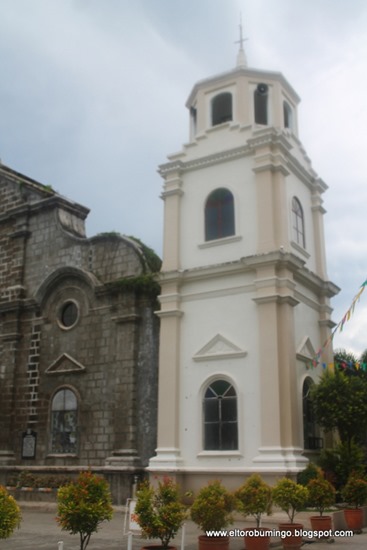
There are two markers on the façade of the San Juan Church (in Batangas) and one of it reads:
Simbahan ng San Juan
Unang ipinatayong yari sa pawid at kawayan sa Pinagbayanan, 1843. Nahiwalay sa Rosario, 1848. Ipinagawa ang simbahang bato ni Padre Damaso Mojica, unang Kura Paroko sa tulong ng mga Principales ng Bayan sa pamumuno ng Gobernador-Silyong si Felipe Salud, 1845. Inilipat sa kasalukuyang pook, 1890: at pinasinayaan ang ngayo’y simbahang bato, sa tangkilik ni Padre Celestino Yoldi, Rekoletos, 1894. Pansamantalang pinamahalaan ng mga Paring Kaputsino, 1904. Pinalitan ang San Juan de Bocboc ng Bolboc sa pamamagitan ng Batas Bilang 2390, 1914. Naging San Juan de Nepomuceno ng mga Unang Taon ng 1920.
Here’s my rough translation:
San Juan Church
Originally made from nipa and bamboo in Pinagbayanan,1843. It was separated from Rosario, 1848. The stone church was commissioned to build by Father Damaso Mojica, first Parish Priest, with the help of the town’s Principales under the leadership of Gobernadorcillo Felipe Salud, 1845. It was transferred to the present location in 189 and inaugurated the present stone church, under the sponsorship of Father Celestino Yoldi, Recollects, 1894. Temporarily administered by the Capuchin Priests, 1904. San Juan de Bocboc was changed to Bolboc by means of Law Number 2390, 1914. It became San Juan de Nepomuceno in the early years of 1920.



San Juan de Nepomuceno, the town’s Patron Saint.

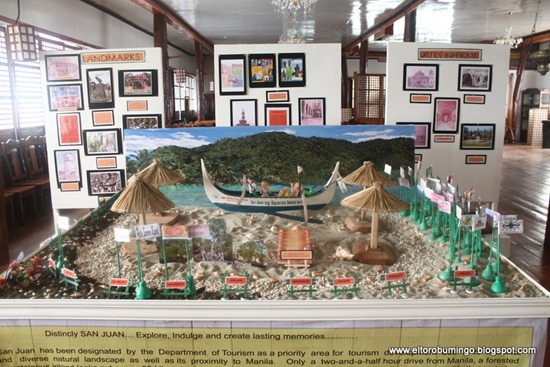

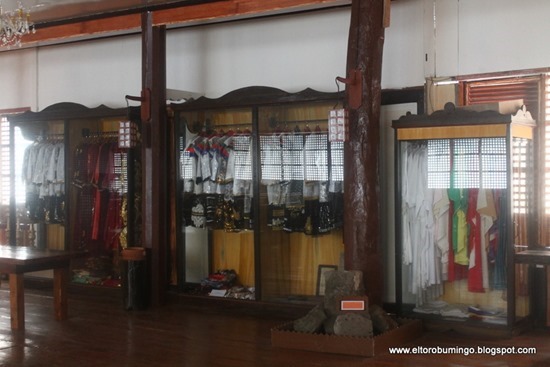
There’s a museum besides the church and here are the things you can find there.
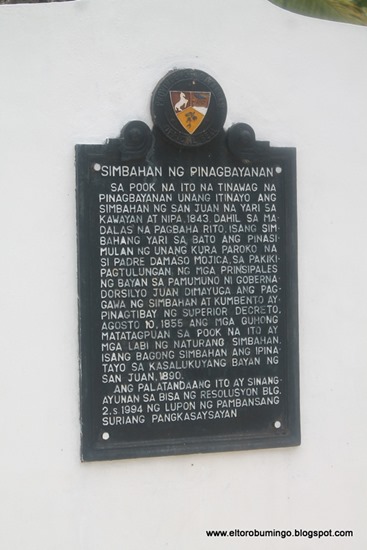
Simbahan ng Pinagbayanan
Sa pook na ito na tinawag na Pinagbayanan unang itinayo ang Simbahan ng San Juan na yari sa kawayan at nipa, 1843. Dahil sa madalas na pagbaha rito, isang simbahang yari sa bato ang pinasimulan ng unang Kura Paroko na si Padre Damaso Mojica, sa pakikipagtulungan ng mga Prinsipales ng Bayan sa pamumuno ni Gobernadorsilyon Juan Dimayuga. Ang paggawa ng simbahan at kumbento ay pinagtibay ng Superior Decreto, Agosto 10, 1855. Ang mga guhong matatagpuan sa pook na ito ay mga labi ng naturang simbahan. Isang bagong simbahan ang ipinatayo sa kasalukuyang Bayan ng San Juan, 1890.
Ang palatandaang ito ay sinangayunan sa bisa ng Resolusyon Bilang 2 s. 1994 ng Lupon ng Pambansang Suriang Pangkasaysayan.
Church of Pinagbayanan
In this location called Pinagbayanan, the Church of San Juan was first built, which is made of bamboo and nipa, 1843. Due to frequent flooding, a church made of stone was initiated by the first Parish Priest Father Damaso Mojica, in cooperation of the town’s Prinsipales under the leadership of Gobernadorcillo Juan Dimayuga. The building of the church and convent was enforced by Superor Decree, August 10, 1855. The ruins found in this place are the remains of that said church. A new church was built in the current Town of San Juan, 1890.
This marker was agreed upon by Resolution Number 2 Series of 1994 by the National Historical Commission.
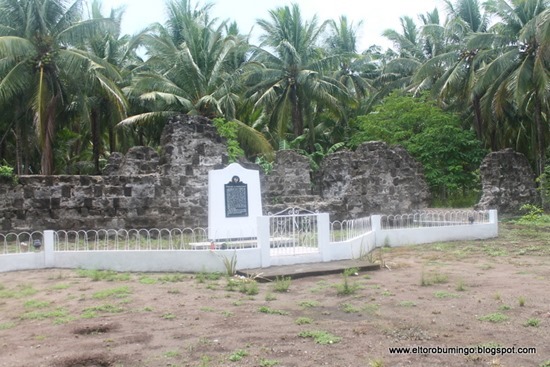
The ruins of the original Church of San Juan in Pinagbayanan.